Building Culture Slowly: Leaders, Truth & No Ultimatums 🧪🗣️
Status: Declassified - File Archive 7 | ITH Sessions, Dressing Room Debates & The Art of Making Over Breaking

We’re back with another file from the archives.
Still connecting dots from Carlo Ancelotti’s Quiet Leadership. The man keeps delivering intel.
This time, it’s about how culture is BUILT — not announced, not imposed, but infused. Slowly. Day by day.
There’s this thing leaders love to do. They join a new team, call an all-hands meeting, and announce the “new culture.” As if culture is a PowerPoint slide you can project onto a wall.
It doesn’t work that way. Ancelotti knows it:
“The players needed to understand, as those at Milan had done, that they were part of a great club — but I had to begin this process slowly, slowly, softly, softly.”
Slowly, slowly. Softly, softly.
Let me confuse you with how I do this. 🎯
📌 The Dot: Slowly, Slowly, Softly, Softly
Ancelotti on culture building:
“I spoke with the players about what we would do and, day by day, we began to improve the culture of the club.”
“We didn’t impose any of this. We just organized things for the players and made it welcoming for them to stay, so that they would want to stay.”
Day by day. No imposition. Make it welcoming.
Sounds nice. But what does it actually look like in practice?
The Field Reality:
I call it culture as slow poison. 🧪
You don’t force it. You infuse it. Day by day. Drip by drip. Until it’s in their blood.
Here’s my playbook:
📚 ITH Sessions (IT’s HOT): We read books together. Watch leadership and team movies. Documentaries. And I MANDATE them to speak.
Here’s the blackmail: “If the session is interactive, we close on time. If not, we go extended.”
First few times, the team thinks I’m joking. “He won’t really keep us late, right?”
Then marathon sessions happen. Weekend sessions happen.
They realize: “Oh. He IS the Super Villain. He IS crazy.” 🦹♂️
🌀 Zephyr 1–1s: Part of the slow poisoning playbook. Regular, structured, agenda belongs to them. Every conversation is a drip of culture.
🎤 Quarterly AMA Sessions: Ask Me Anything. Or as I like to call it — Attack Me with Anything.
Here’s what surprised me: Questions that NEVER came up in 1–1s came up in AMAs.
Why? Even though they feel safe with me one-on-one, sometimes they need the support of numbers. Seeing teammates who feel the same gives them courage to ask the tough questions.
🎬 Netflix “Freedom and Responsibility”: The cultural model that aligns with Kissflow’s values. The bedrock of everything we build.
The Twist:
Over a period of time, through these cultural drills, I make the team a gang of people with the same mental disorder.💀
That’s not an accident. That’s slow poison working.
Think about how Fury built SHIELD. He didn’t announce the culture in a memo. He recruited people one by one. Trained them. Tested them. Let the culture seep into them through missions and mentorship. By the time the Avengers assembled, they already FELT like a team — even though they’d never worked together.
You can’t announce culture. You can’t impose culture. You can only infuse it — session by session, conversation by conversation, until it becomes who they are. 🛡️
📌 The Dot: Types of Leaders
Now, as you’re building culture, you need to understand something important. Not everyone leads the same way — and that’s by design.
Ancelotti identifies two types:
“Ronaldo is what I call a ‘technical leader’, who leads by example; he doesn’t speak a lot but is serious, very professional and takes care of himself.”
“Ramos is what I call a ‘personality leader’, a leader with strong character, who is never scared, never worried — always positive.”
And he says:
“Sometimes it’s the players who have to be the leaders, not the manager.”
Technical Leaders and Personality Leaders. Both essential. Both different.
The Field Reality:
I see these two types in my teams. And I keep them SEPARATE — by design. 🎯
DevOps:
🔧 Noordeen = Technical Leader (the Tony Stark — speed, systems thinking, innovation)
🌱 Aravindhan = Technical Leader (still active), now thinking about pursuing the Cultural Functional path in the future
QA:
🔧 Santhosh = Technical Leader
🎭 Akshaya = Cultural Functional Leader
Other companies might merge these two leadership types into one role. “You’re the tech lead, so you’re also the people lead.”
I don’t do that. Here’s why:
Each type has strengths. Each type has blind spots. When you pair them, their gaps cover each other.
🔧 Technical Leader’s blind spots → Covered by Cultural Functional Leader
🎭 Cultural Functional Leader’s blind spots → Covered by Technical Leader
They complement. They balance. Like how Tony Stark and Steve Rogers were different kinds of leaders — one led through innovation and brilliance, the other through values and presence. The Avengers needed BOTH.
The Twist:
I WAS a Technical Leader. In 2018, I purposely pivoted to Cultural Functional — the coach role.
I did it while I still had my best Techie years left. Not when I was fading. Not when I had no choice.
Why? Because I saw that the team needed a coach more than another player. They had enough technical strength. They needed someone to build the culture.
Ancelotti says sometimes the players have to be the leaders. I agree. But someone has to build the environment where player-leaders can emerge.
That’s the coach’s job. That’s Fury’s job. That’s my job. 🛡️
📌 The Dot: Truth to Power
Culture isn’t just about slow poison and leader types. It’s also about what people are ALLOWED to say.
Ancelotti on Ibrahimović:
“He was never afraid to speak the truth to anyone, even me.”
And he’s clear about what leaders must do:
“Speaking truth to power has to be an acceptable behaviour. Leaders have to enable it for their own benefit. It is not a ‘nice to have’, it is essential.”
Not nice to have. Essential. If your team can’t tell you the truth, you’re flying blind.
The Field Reality:
Here’s the problem Netflix’s Reed Hastings describes in No Rules Rules:
“The higher you get in an organization, the less feedback you receive, and the more likely you are to ‘come to work naked’ or make another error that’s obvious to everyone but you.”
When the office assistant screws up a coffee order and no one tells him — no big deal.
When the CFO screws up a financial statement and no one dares challenge it — crisis.
The higher you go, the more dangerous silence becomes.
How I Enable Truth to Power:
📋 Put feedback ON the agenda — In Zephyr 1–1s, feedback isn’t optional. It’s expected. First or last item. Separate from operational talk.
🤝 Belonging cues — When they speak up, respond with gratitude. Appreciative tone. Eye contact. Thank them for courage. Show them: “You spoke truth and you still belong here.”
🎤 AMA = Attack Me with Anything — Quarterly sessions where the team can challenge me publicly. Questions come up there that never came up in 1–1s. The group gives them courage.
🚫 Make it non-negotiable — Like Hastings told his employee: “The day you find yourself sitting on your feedback because you’re worried you’ll be unpopular is the day you’ll need to leave.”
🎯 Netflix 4A Feedback System — The structured way to give and receive feedback well.
The Twist:
But here’s the confusion — when they speak up, I don’t just nod and say “thank you for your feedback.” 🤝
Sometimes I fight them aggressively — like a coach and player debating in the dressing room. ⚔️
Both are true:
✅ I make it SAFE to speak up
⚔️ But when they do, I engage, push back, debate
Why? If I just nodded at everything, they’d think I don’t care. Or worse — their opinion didn’t matter enough to fight over.
When I fight back, I’m saying:
“Your opinion matters enough for me to engage. Let’s battle it out.”
That’s respect. Dressing room style.
Think about Tony and Cap arguing in the Avengers. They fought HARD. Disagreed publicly. But that friction made them better. Fury didn’t stop those arguments — he let them happen. Because truth has to be spoken, even when it’s uncomfortable. Especially when it’s uncomfortable. 💀
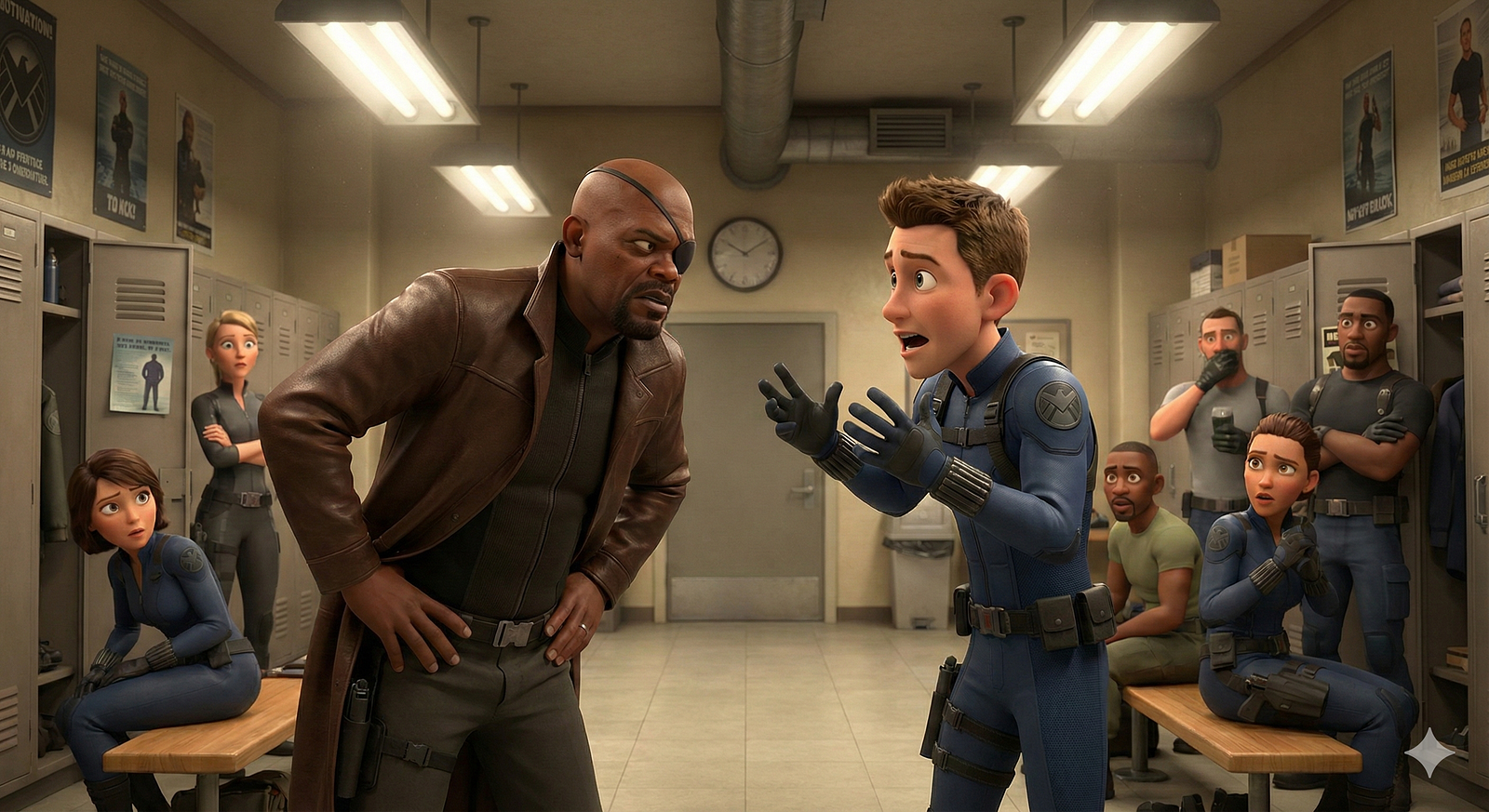
Your opinion matters enough to fight over. That’s respect.
📌 The Dot: No Ultimatums
Now let’s talk about what happens when things get really hard. When someone’s not performing. When you’re tempted to draw a line.
Ancelotti is direct:
“If you have to sack people then sack them — don’t tell them that if they lose or do a bad job you’re going to sack them. If I don’t do a good job then just fire me, but don’t give me stupid ultimatums. You are the boss, so of course you have the right to sack whoever you want — just be a man about it.”
No “do this or else.” Just make the call. Don’t threaten — act.
The Field Reality:
I don’t give up on people easily. Even when THEY give up on the system or on me.
Exit is the easiest route. Breaking is easy.
Making is not. And as a coach, I know that.
I always believe there’s something still not visible. Some blocker, some fear, some misalignment. And if we find it, we can make things instead of breaking things.
Sam Prasad’s Example:
I was a jerk. Immature. Problematic. The kind of employee most managers would cut loose.
Sam took 3–4 YEARS before I started realizing my stupidity and aligning with him.
One day I asked him: “Why did you spend that much time on me? You could’ve sent me out and found someone more seasoned and expert.”
His answer:
“Sometimes, as a leader, there’s an intuition that says — if this problematic person is aligned, he’ll take the team and himself to places. And as a leader, sometimes you have to take that call.”
He bet on the problematic person. That bet was me. 💀
The Reality:
Have I fired people? Yes. It’s never comfortable — even when they don’t want to bounce back.
Sometimes when I want to make, THEY break with me. It stings. But I understand — that happens.
When breaking happens:
🤝 Shake hands
🙏 Wish them well
🤝 Offer to help in the future
The Twist:
This might seem like it deviates from my Super Villain character. Villains are supposed to be ruthless, right?
But here’s the thing:
“You can’t box Super Villains with any perimeter or rules. They do what they want to do because they want to do it that way.”
The Super Villain fights for his people. That’s not weakness. That’s the villain’s code.
Fury could have given up on Stark. On Banner. On Romanoff. They were all problematic. Complicated. Risky bets.
He didn’t. He kept making, not breaking. And look what they built together. 🦹♂️
📌 The Dot: Unselfish Leaders
Finally, let’s talk about what separates good leaders from great ones.
Ancelotti on Ibrahimović:
“Ibra is one of the few strikers, maybe the only one, who is just as happy when he makes an assist as he is when he scores.”
“He is one of the most unselfish players I have ever met, which is of massive value to the team.”
Just as happy with an assist as a goal. That’s rare. Most strikers live for the glory of scoring. Ibra lives for the WIN — regardless of who gets the credit.
The Field Reality:
Sam Prasad taught me this. And I later saw MS Dhoni practice it perfectly. 🏏
The Dhoni Model:
🏆 When team WINS → Dhoni credits the team. Hands over the cup in microseconds. Stays in the corner so the team takes the limelight.
🔥 When team LOSES → Takes responsibility. Faces the heat. Doesn’t throw players under the bus.
Sam told me:
“If you score while the team loses, you might have fame for the score — but you lost as a leader. Put the team first.”
The Dancer Story:
I was a dancer once. Years back, I FAILED in a competition. It stung. I moved on.
Later, I choreographed a team of girls. They entered the SAME competition.
They won. 🏆
That high — when your team scores on games YOU lost in the past. That’s the ultimate assist.
I didn’t need to be on stage. I put THEM there. And their victory felt bigger than any I could have won myself.
The Twist:
If you ask me who’s my Ibrahimović — all my bosses, fellow leaders, and coaches have been unselfish. Regardless of which field they’re from.
They celebrated assists over goals. They put team first. They stayed in the corner when the team won.
That’s the model I absorbed. That’s the model I practice.
Think about Fury at the end of the first Avengers movie. Who gets the credit? The Avengers. Who’s in the shadows? Fury. He built the whole thing, and he’s content to let them take the spotlight.
The best leaders don’t need the spotlight. They create it — for others. 🔦
🎯 The Debrief
Culture isn’t announced. It’s infused. Slowly, slowly. Softly, softly.
Here’s the operating system:
🧪 Culture as slow poison — ITH, Zephyr, AMA, Netflix F&R — until they become a gang with the same mental disorder
🔧🎭 Two types of leaders — Technical and Cultural Functional — keep them separate, let them cover each other’s gaps. Tony and Cap energy.
🗣️ Truth to power is essential, not nice-to-have — put feedback on the agenda, give belonging cues, make it expected
⚔️ But also fight them in the dressing room — if you just nod, they think you don’t care
🛠️ Making over Breaking — don’t give up easily. Sam spent 3–4 years on me. Fury didn’t give up on the Avengers.
💡 Intuition: “If this problematic person aligns, he’ll take the team to places”
🦹♂️ Super Villains can’t be boxed — they fight for their people their own way
🏏 Unselfish leaders celebrate assists over goals — Dhoni model, dancer story, Fury in the shadows
🔦 The best leaders don’t need the spotlight — they create it for others
Culture is slow. Leadership is patient. And the best goals are the ones you set up for someone else to score.
Stay slow. Stay unselfish. Stay poisonous. 🧪⚡
Class dismissed. ✊


